

Leading Customer Experience (CX) AI Platform
Generate
Extraordinary
AI-powered
Complete
Personalized
Connected
Next-level
Intelligent
Amazing
World-class
Extraordinary
Experiences
Build relationships that last with the only AI purpose-built for CX.
Request Demo Explore Solutions
Generate
Experiences
Extraordinary
AI-powered
Complete
Personalized
Connected
Next-level
Intelligent
Amazing
World-class
Extraordinary
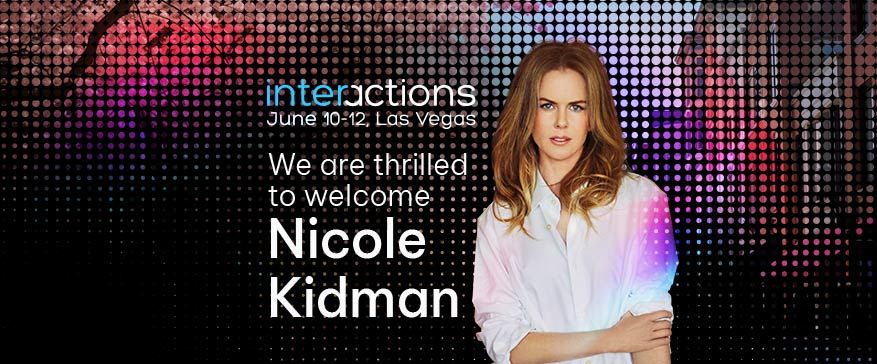
Don't miss Academy Award-winning actress, Nicole Kidman at Interactions 2024 Register now
Achieve it all with NICE CXone.
Organizations around the world are striving to deliver the ultimate consumer experience, strengthen brand value, and boost efficiency. The pathway to achieving these objectives unveils three pivotal breakthroughs: a unified interaction-centric platform, convergence of rich CX capabilities, and an AI purpose-built for CX.
Seize these breakthroughs with NICE CXone, where every interaction is an opportunity for excellence.
Seize these breakthroughs with NICE CXone, where every interaction is an opportunity for excellence.

Interaction-Centric
Platform
Platform
Orchestrate every customer interaction across channels seamlessly with NICE CXone, all on a cloud-native platform that scales securely, deploys quickly, and satisfies customers globally.

Rich CX
Capabilities
Capabilities
Master each interaction with NICE CXone’s rich CX capabilities, where channels, data, applications, and knowledge converge to improve customer experience at scale.

AI purpose-built
for CX
for CX
Unleash the precision of Enlighten, purpose-built AI for CX and infused through NICE CXone, to orchestrate exceptional experiences for employees, consumers, and businesses.
Latest News
Latest News

News
NICE CEO’s 2023 Letter to Shareholders
Read now

EVENT
Q1 2024 Earnings Release Conference Call - May 16, 2024
More details
Event
Interactions 2024 is where the future of CX is defined.
Register now

Event
Join us in London for Interactions International 2024!
Register now

Announcements
NICE Announces The Close of The LiveVox Acquisition, Creating a Conversational AI Powerhouse
Learn more
Market Leadership
NICE scores highest in 2022 Opus Research Conversational Intelligence Intelliview report
Get the report

Market Leadership
NICE named a Leader in 2023 Gartner Magic Quadrant™ for Contact Center as a Service
Get the report
Discover
Trusted by the world's leading companies.
























Don’t take our word for it.
-
Forrester names NICE a leader in CCaaSThe Forrester Wave™: Contact Center As A Service, Q1 2023 report results are in!
Read a complimentary copy of the 2023 Forrester Wave report. -
2023 Gartner Magic Quadrant for CCaaS reportNICE named a Leader in 2023 Gartner Magic Quadrant™ for Contact Center as a Service
-
2023 Metrigy CCaaS MetriRank ReportNICE Takes Top Spot in Metrigy’s Inaugural Contact Center-as-a-Service (CCaaS) MetriRank Report.



AI-Powered
Customer Service
Transform your contact center into a world-class customer experience center and form longer-lasting relationships
Transform CX with AI All-Encompassing
Cloud Foundation
Surprise and delight your customers with seamless, efficient, and friendly conversations while keeping your costs under control
Move to the Cloud